
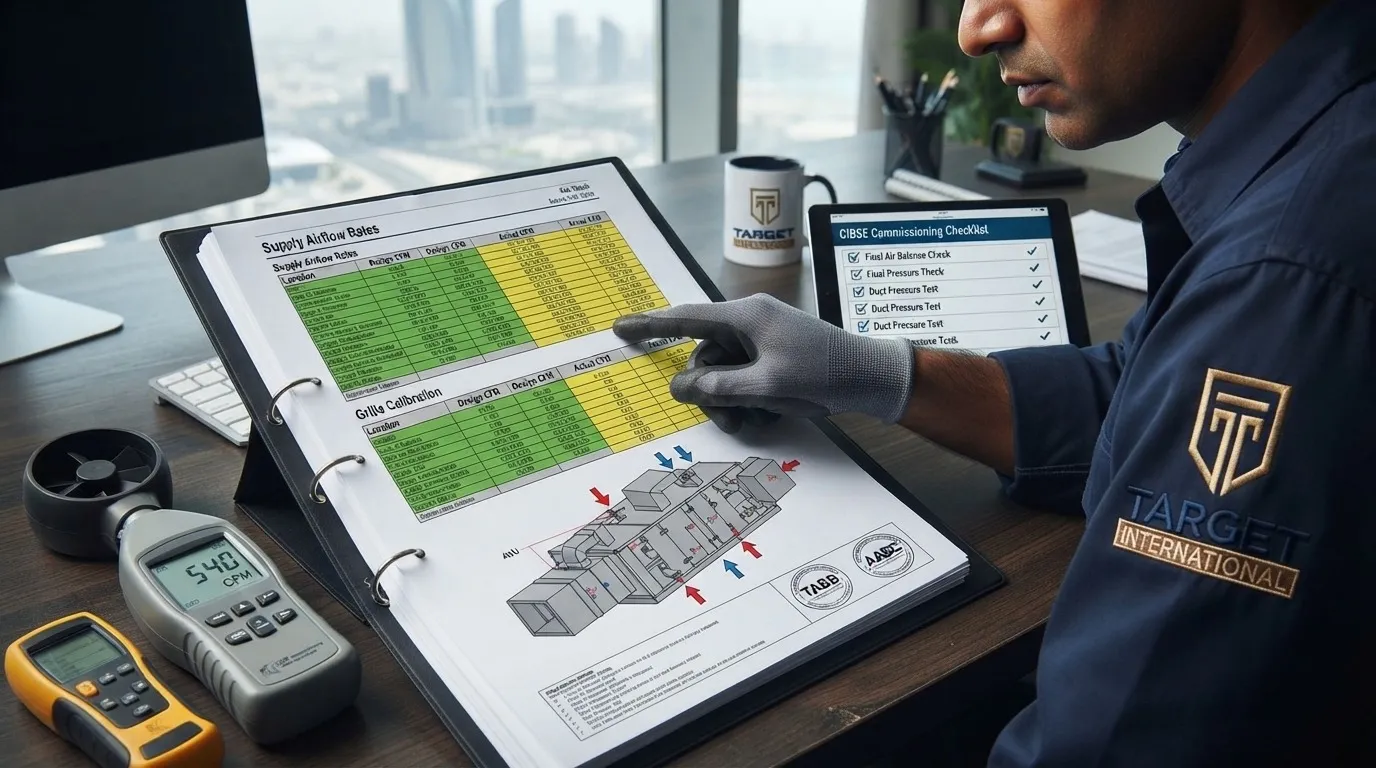
Testing, Adjusting, and Balancing (TAB) is one of the most overlooked yet critical steps in HVAC commissioning. In the UAE’s extreme climate, an unbalanced system does not just waste energy, it creates uncomfortable hot spots, accelerates equipment wear, and can fail authority inspections.
Here is why TAB matters and what you should expect from a professional TAB report.
What Is TAB?
TAB is the process of measuring and adjusting airflow and water flow rates through an HVAC system to match the design engineer’s specifications. It involves:
- Measuring air velocities at diffusers and grilles
- Balancing ductwork using dampers
- Adjusting chilled water flow rates at coils
- Verifying pump and fan performance curves
- Documenting all readings against design values
Without proper TAB, even a perfectly designed system will underperform.
Energy Efficiency in the UAE Climate
Abu Dhabi’s summer temperatures regularly exceed 45 degrees Celsius. An unbalanced HVAC system works harder than necessary, driving up electricity consumption. Common symptoms include:
- Some rooms too cold while others remain warm
- Chillers running at maximum capacity constantly
- High humidity in certain zones
- Excessive noise from fans and dampers
Professional TAB typically improves system efficiency by 15 to 25 percent, paying for itself within the first year through reduced DEWA bills.
Regulatory and Consultant Requirements
Major Abu Dhabi developers and engineering consultants require TAB reports as a condition for Practical Completion. Our reports are prepared in accordance with:
- CIBSE Code A: Air Distribution Systems
- ASHRAE Guideline 111
- SMACNA TAB Standards
These standards ensure your documentation will be accepted by authorities including DMT, DOT, and private consultants like Parsons, AECOM, and MZ Architects.
When Should TAB Be Performed?
TAB should be conducted:
- After new HVAC installation, before handover
- Following major renovations or system extensions
- When occupancy changes significantly
- If energy bills increase without explanation
- Every 3 to 5 years as part of preventive maintenance
What a Professional TAB Report Includes
Our TAB reports include:
- Executive summary with pass/fail status
- Detailed measurements at every outlet and coil
- Fan and pump performance curves
- System schematic with test point locations
- Before-and-after comparison tables
- Recommendations for further optimization
- Consultant sign-off sheet
Do Not Skip TAB
Some contractors treat TAB as a checkbox exercise, rushing through measurements to meet a deadline. This defeats the purpose. Proper TAB requires precision instruments, experienced technicians, and time. At Target International, our TAB team uses calibrated anemometers, manometers, and flow meters traceable to international standards.
Schedule Your TAB Service
Whether you are commissioning a new chiller plant in Abu Dhabi or troubleshooting an existing VRF system in the Western Region, our TAB specialists can help. Contact Target International at 02 554 4056 to schedule a consultation.
Need MEP Support?
Our team is ready to help. We serve Abu Dhabi and the Western Region.